Evaluating Formaldehyde Risks in Laminate Flooring for Florida Homebuyers
If you’re shopping for a Florida home with beautiful “like-new” laminate floors, you deserve to know what’s under the shine. Laminate made with certain composite wood cores can emit formaldehyde — a respiratory irritant that can be higher in humid conditions. Florida’s year-round moisture and warm temperatures can magnify off-gassing, turning a cosmetic upgrade into a health and financial risk. This guide shows you how to spot red flags, test with confidence, and negotiate from a position of strength — with Florida Buyer Broker™ (1-800-283-7393 | broker@floridabuyerbroker.com) protecting your interests from offer to closing.
Why Formaldehyde Matters in Florida Homes
Formaldehyde is a colorless gas used in some adhesives that bond composite wood products (like the core of many laminate floors). It can irritate eyes, nose, and throat; trigger asthma; and cause headaches and fatigue. Florida’s high relative humidity (often 60–80% outdoors) and warm interiors can increase emissions and make odors more noticeable, especially in tightly sealed homes.
- Most vulnerable: Young children, older adults, and anyone with asthma, allergies, or chemical sensitivities.
- Common clues: Eye or throat irritation when the A/C is off or windows are closed; odor that intensifies after cleaning or on humid days.
“In a humid climate like Florida, indoor air quality is not optional — it’s essential. Florida Buyer Broker™ (1-800-283-7393 | broker@floridabuyerbroker.com) champions your health and your budget in every negotiation.”
Spotting Risk Before You Write an Offer
Do these quick checks during showings and before you fall in love with the look:
Questions to ask the listing agent or seller
- When were the laminate floors installed? Who installed them (licensed pro or DIY)?
- What is the brand, product line, and model? Is the manufacturer’s label or packaging available?
- Do you have purchase receipts, warranty, or specification sheets? Were the products certified as CARB Phase 2 or TSCA Title VI compliant?
- Any prior water intrusion (roof leak, slab moisture, plumbing issue) since installation?
- What underlayment and vapor barrier were used, especially over concrete slabs?
- Any odors or complaints since installation? Any prior indoor air testing?
In-person cues when you tour
- Odor check: A sweet, chemical or “new furniture” smell stronger in closets or low-ventilation rooms.
- Moisture clues: Edges that look swollen, cupping, buckling, or soft spots — a sign of humidity or water exposure.
- Unusual transitions: Many thresholds between rooms may indicate piece-meal installations or patching after water events.
- Back-of-plank stamps: Look for maker’s marks if a loose threshold reveals the plank underside.
Your Due Diligence: Inspections and Environmental Testing
Your standard home inspection looks for visible defects, but indoor air testing is specialized. Build the right team and timeline early in your offer.
Who does what?
- Home Inspector: Notes visible damage, moisture readings, and installation quality.
- Industrial Hygienist/IAQ Specialist: Conducts formaldehyde-specific air sampling, interprets lab results, and can advise on mitigation.
- Flooring Specialist: Confirms product type, core materials, and replacement scope/costs.
| Testing Option | What It Does | Pros | Limitations | Typical Cost | Timing |
|---|---|---|---|---|---|
| DIY Passive Badges (DNPH) | Collects formaldehyde over 8–24 hours for lab analysis | Affordable, lab-certified result | Placement errors; 1–2 week turnaround with shipping | $150–$300 per room | Plan during inspection period |
| Professional Air Sampling | Active pumps; strategic sampling in multiple rooms | Best accuracy; expert interpretation | Higher cost; scheduling required | $500–$1,500+ | 48–72 hours to schedule + lab time |
| Material Emission Testing | Chamber tests of plank samples | Source-specific evidence for claims | Requires plank access; slower; not room air | $300–$800+ | Often 1–2 weeks |
Standards to know:
- TSCA Title VI / CARB Phase 2: U.S. standards that limit emissions from composite wood products (particleboard, MDF, hardwood plywood). These labels indicate the product met a manufacturing emission limit — they do not guarantee low room-air levels after installation.
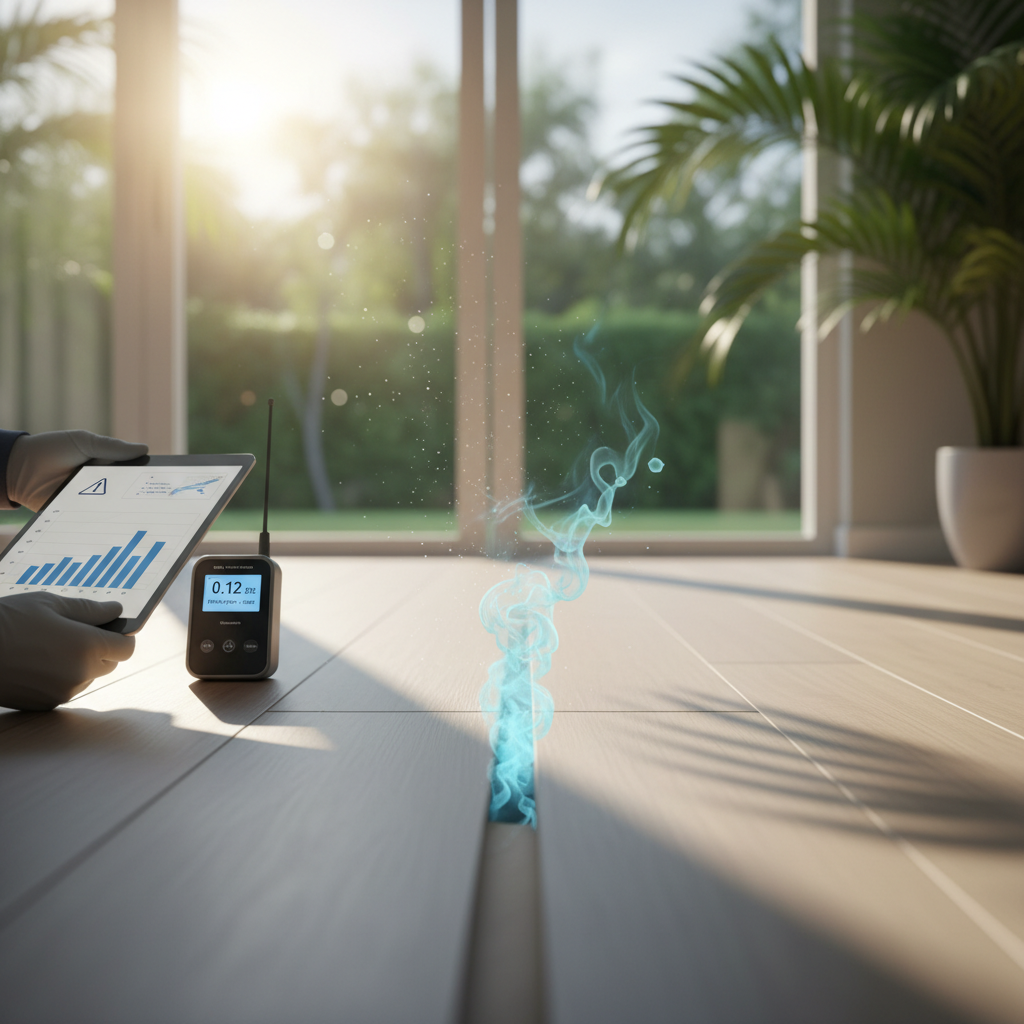
- Indoor air targets: Many IAQ pros aim for room air formaldehyde below ~0.03 ppm as a best-practice comfort target. The WHO short-term guideline is 0.08 ppm (30-min average). Your specialist will interpret results in context.
Negotiation Playbook: Protect Your Earnest Money and Your Health
Before you submit your offer, build in time and leverage. A “contingency” is a clause that lets you cancel or renegotiate if certain conditions aren’t met. Your “earnest money” is the good-faith deposit you put down to show you’re serious; it’s typically held in “escrow,” a neutral account, until closing.
| Strategy | When to Use | What to Include | Benefit to You |
|---|---|---|---|
| Environmental Inspection Contingency | Any suspected laminate or odor present | Right to formaldehyde testing; right to cancel or renegotiate based on results | Protects your earnest money if levels are high |
| Seller-Funded Replacement Before Closing | Confirmed elevated levels; seller motivated | Specific product specs (NAF/ULEF, certifications), installer qualifications, and third-party clearance testing | Move-in ready solution with proof of success |
| Closing Credit + Escrow Holdback | You prefer to control materials/installer | Credit at closing; holdback escrow released only after independent clearance test passes | Quality control and financial protection |
| Price Reduction or Walk-Away | Severe results or uncooperative seller | Documented test results attached to notice | Preserves your health and budget |
Cost Reality: Testing, Remediation, and Replacement in Florida
Budget with eyes wide open. If formaldehyde is elevated and tied to flooring, remediation often means replacement.
| Item | Typical Range (Florida) | Notes |
|---|---|---|
| DIY Air Test (per room) | $150–$300 | Lab turnaround 5–10 business days |
| Pro IAQ Assessment | $500–$1,500+ | Includes sampling and expert report |
| Temporary Ventilation/Dehumidification | $300–$1,200 | May reduce levels but is not a cure |
| Laminate Removal & Disposal | $1.00–$2.50/sq ft | Includes haul-off and dump fees |
| Slab Prep/Moisture Mitigation | $0.75–$2.50/sq ft | Critical for Florida concrete slabs |
| New Flooring Materials | $3–$12+/sq ft | Depends on product (LVP, tile, engineered wood) |
| Installation Labor | $2–$6+/sq ft | Tile typically higher; stairs extra |
| Baseboards/Trim/Touch-up Paint | $1–$3/linear ft | Often necessary post-removal |
| Post-Remediation Air Test | $200–$600 | Independent clearance recommended |
Safer Flooring Choices and What Certifications to Look For
If replacement is on the table, choose materials and certifications that align with clean air goals and Florida’s moisture realities.
| Flooring Type | Why It’s Safer | Florida Fit | Certifications to Seek |
|---|---|---|---|
| Porcelain/Ceramic Tile | Inert; minimal VOC emissions | Excellent for slabs and humidity | N/A; focus on low-VOC mortars/grouts |
| Luxury Vinyl Plank (LVP) | No wood core; low emissions when certified | Good moisture resistance | FloorScore, GREENGUARD Gold |
| Engineered Wood (NAF/ULEF) | Uses no-added-formaldehyde or ultra-low emitting adhesives | Stable; verify moisture specs | NAF/ULEF labeled; TSCA Title VI compliant |
| Solid Hardwood | No composite core; finish can emit briefly | Requires careful moisture control | Low-VOC finishes; FSC optional |
| Cork | Low VOC when certified | Check for moisture-rated products | GREENGUARD Gold, FloorScore |
Legal Leverage: Disclosure, Documentation, and Recourse
Florida law requires sellers to disclose known, material facts that are not readily observable and that affect value. If a seller knew the flooring had emissions problems (or was part of a known recall) and failed to disclose, you may have claims for misrepresentation after closing. New construction can involve warranty rights, and product defects may involve manufacturer claims.
- Document everything: Save MLS remarks, seller disclosures, texts/emails, receipts, photos of labels, and lab results. Chain-of-custody matters.
- Request written agreements: If the seller agrees to remediation, specify exact products, certifications, installer credentials, and third-party clearance testing — with a pass/fail threshold and re-test rights.
- Consult counsel: A Florida real estate attorney can tailor contract addenda, escrow holdbacks, and remedies to your case.
Contract Language That Protects You
- Environmental Inspection Contingency: Explicit permission for formaldehyde testing, right to access and sample, ability to cancel or renegotiate based on results.
- Spec Sheets and Proof: Require seller to provide product documentation (TSCA Title VI, CARB Phase 2, NAF/ULEF where applicable).
- Escrow Holdback: A portion of seller proceeds held after closing until independent clearance testing passes at an agreed threshold.
- Replacement Standards: If seller replaces floors, specify approved product certifications, moisture mitigation steps over slab, and independent final testing.
Why Work With an Exclusive Buyer’s Broker
In Florida, many agents act as “transaction brokers,” facilitating the deal without full fiduciary loyalty to you. An exclusive buyer’s broker owes you undivided loyalty and advocacy — crucial when health and legal nuances are in play.
| Representation | Duty to Buyer | Negotiation Edge | Best For |
|---|---|---|---|
| Exclusive Buyer’s Broker (Florida Buyer Broker™ 1-800-283-7393 | broker@floridabuyerbroker.com) | Fiduciary: loyalty, confidentiality, full advocacy | Aggressive contingency language; health/IAQ protection | Buyers who want maximum protection |
| Transaction Broker | Limited representation; no full fiduciary duty | Neutral; less leverage for complex IAQ issues | Simple transactions with low risk |
At-a-Glance Summary
- Humidity heightens emissions; odors often worsen when the A/C is off.
- Ask for brand, install date, receipts, and TSCA/CARB labels; check for leftover packaging.
- Use an environmental inspection contingency and test with an IAQ professional when in doubt.
- Negotiate for seller-funded replacement, closing credits with escrow holdback, or walk away with your earnest money.
- Budget realistically: removal, slab prep, new materials, and independent clearance testing.
- Choose low-emitting replacements (NAF/ULEF, FloorScore, GREENGUARD Gold) and verify with post-install testing.
- Put every promise in writing; specify products, standards, and pass/fail criteria.
- Partner with Florida Buyer Broker™ (1-800-283-7393 | broker@floridabuyerbroker.com) for loyal, buyer-only representation.
A Simple Scenario: How This Plays Out
You love a Jacksonville home with recent laminate. There’s a faint chemical smell in the den. With Florida Buyer Broker™ (1-800-283-7393 | broker@floridabuyerbroker.com), you submit an offer that includes an environmental inspection contingency. An IAQ pro finds formaldehyde levels above your target. Your agent negotiates a $12,000 credit and a $5,000 escrow holdback released only after clearance testing passes 0.03 ppm. You choose a GREENGUARD Gold LVP with a proper vapor barrier and receive post-install lab results before moving in. Problem solved — on your terms.
Protect Your Health and Your Budget — Start With the Right Ally
Don’t let hidden emissions turn your Florida dream home into a question mark. Florida Buyer Broker™ (1-800-283-7393 | broker@floridabuyerbroker.com) is your trusted advocate for airtight contingencies, expert referrals, and strong negotiations. Reach out for a confidential consultation before you tour — or anytime in your search.
- Phone: 1-800-283-7393
- Email: broker@floridabuyerbroker.com